
BeBox 133 MHz
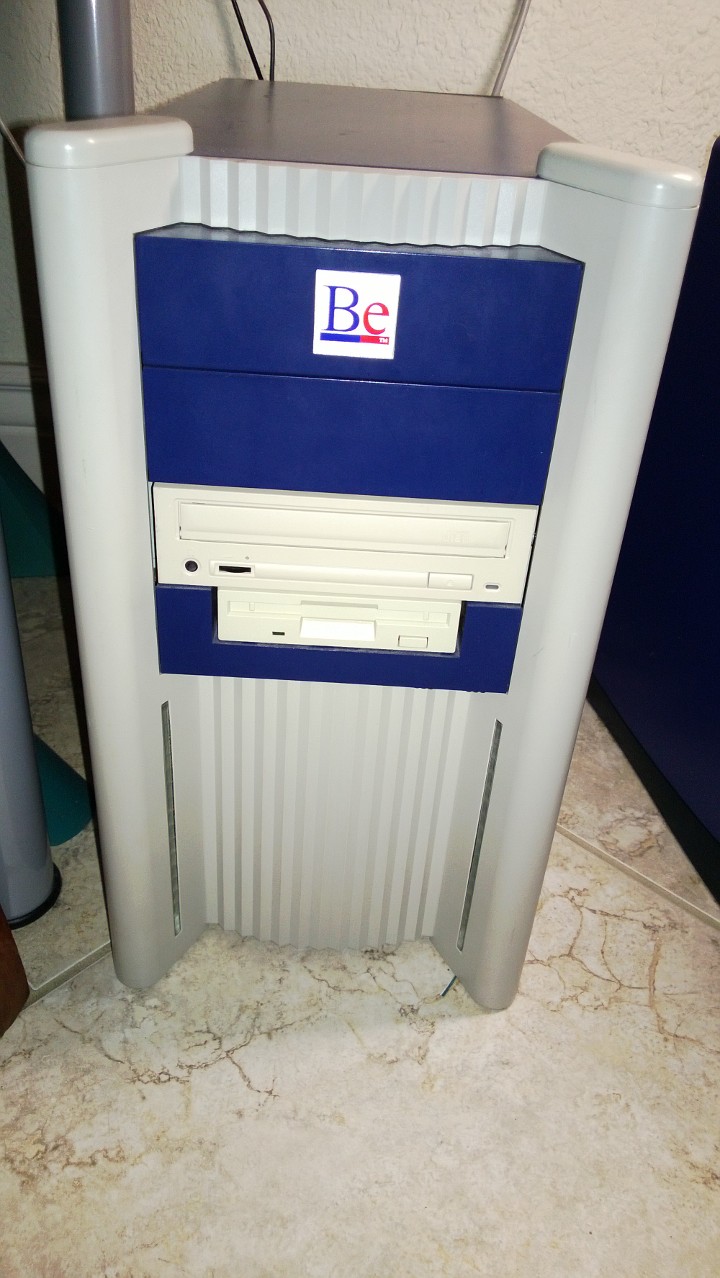
A BeBox Dual603-133 development workstation with surviving BeOS source files.
.jpg)
Technical record
- Category
- Computer
- Collection status
- Held by ATX Computer Museum
- Reference
- ATX-CAT-BEBOX-133-MHZ
- Processor
- Two PowerPC 603e processors at 133 MHz
- Operating system
- BeOS
- Source material
- Utilities and games, partial surviving source
Background
A computer built around doing several things at once
The BeBox wore its architecture on the front panel. Two columns of activity lights made both processors visible at a glance. Be’s wager was that a personal computer should remain responsive while it played sound, moved images, handled files, and ran several applications. Multiprocessing and a heavily threaded operating system were the starting point.
This Dual603-133 pairs two 133 MHz PowerPC 603e processors with BeOS. The GeekPort extended the machine’s invitation to experiment: digital and analog connections put hardware projects within reach of the same computer used to write software. The blue enclosure belonged to a system that treated media, concurrency, and tinkering as everyday work.
This particular machine was used for development at Be, Inc., and came to Amir Husain from a former Be employee. It still retains original BeOS source files, including utilities and games. In Husain’s collection history, it is the only known surviving Be-used system retaining this source material. Its distinction lies in that combination: the company’s own development machine, the operating environment, and the code still together.
Source files bring us closer to the workbench. They show how a program was put together: its functions, interfaces, naming choices, and the practical decisions behind a finished application. Preserving them on a machine used at Be keeps a part of the company’s working life attached to its most recognizable hardware.
The BeBox belongs beside NeXT and SGI: three attempts to make a personal workstation feel more capable through the relationship between hardware and software. Sirius takes the same system-level question in another direction, asking what can be achieved when the entire machine must approach fifty dollars.
Provenance: Amir Husain’s acquisition account and collection records, including surviving utilities and games source. Platform context: Computer History Museum, 1995 BeBox.