
Networks Before
the Web
EduNET, SDNP, and the programs used to exchange information when a connection was a scheduled event.
A network for schools
A December 1995 account by Don de Silva describes EduNET as a Lahore-based educational network established with assistance from UNDP’s Sustainable Development Networking Programme. It names Midhat Kazim as founder and Alif Laila as a partner providing computer training.
The service connected state schools, offered Urdu and English discussions, and provided email, reference material, and downloadable software. Its indexed database was intended to help teachers find material for lessons.
SDNP and the cost of a connection
UNDP’s Sustainable Development Networking Programme supported electronic information exchange among development organizations. A February 1995 message describes its Pakistan service and the practical difficulties of keeping email connections reliable.
An October 1996 survey records SDNP’s offline UUCP service, including Waffle software and charges based on message size, alongside full Internet services. Scheduled exchange and continuous connectivity served different needs in the same developing network.
Tariq Mustafa’s October 1996 access survey →
Interflex: working between calls
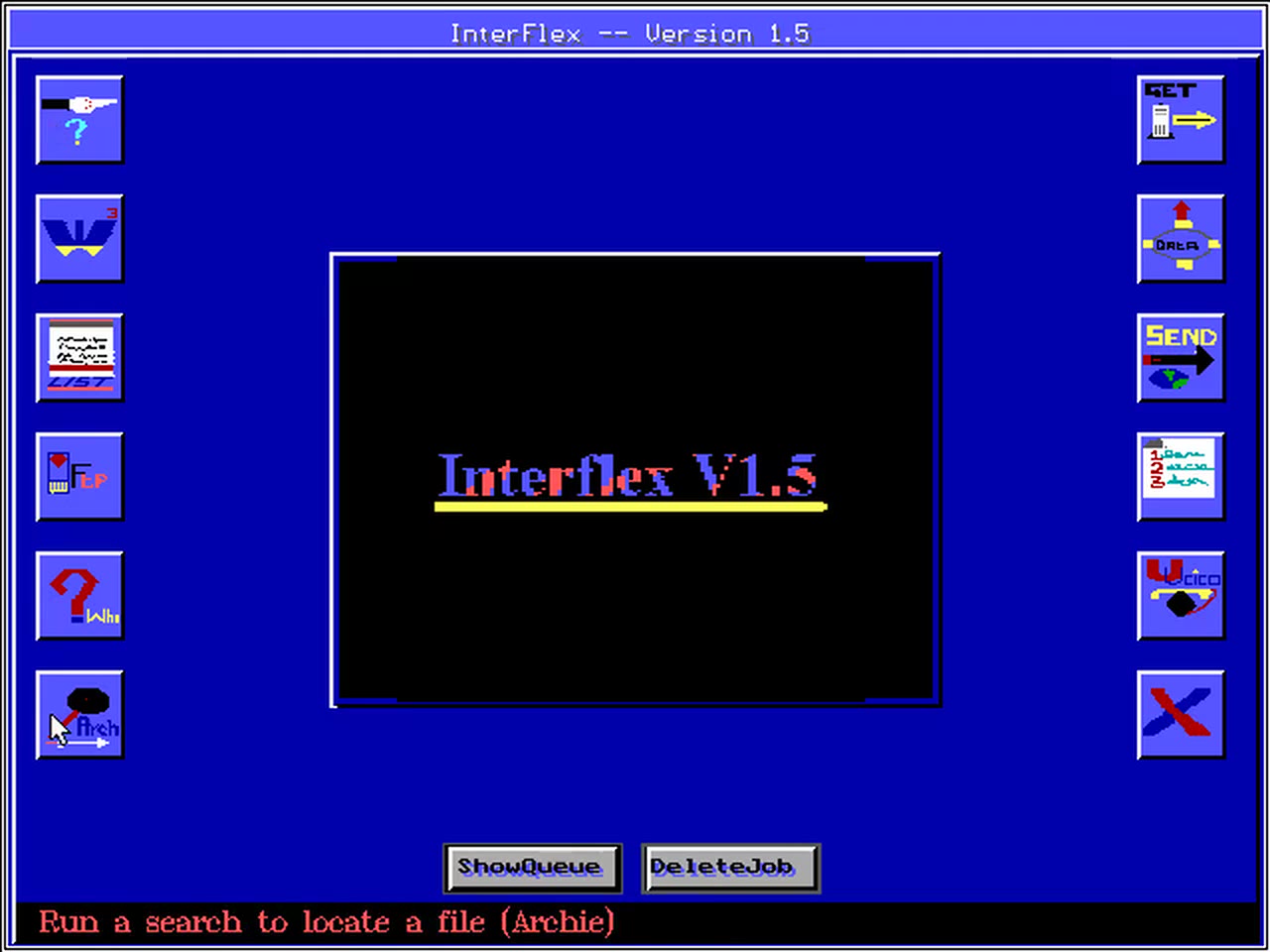
In his software notes, Husain describes writing Interflex to queue requests and open returned material through a graphical interface. The historical network accounts establish the setting. The program’s authorship and design are documented by the collection’s separate software record.
Interflex makes that rhythm tangible: browse locally, queue a request, make the call, then read the material that arrives.
- 01 · BrowseRead an index already on the local computer.
- 02 · QueueChoose the material to request.
- 03 · ExchangeConnect and transfer the requests and returned files.
- 04 · ReadOpen the material after the connection ends.
Take a seat at the terminal
Request a file, hear the rhythm of a scheduled exchange in the terminal log, then read the result. The Interflex exhibit puts the recorded program beside a working model of the call.
A short chronology
A documented SDN service
A UN program officer’s message describes email and network services available through the Pakistan project.
Full Internet connectivity
NSRC preserves a connectivity report and traceroute to a host in Pakistan. It documents full connectivity alongside the offline services.
EduNET’s school network
Don de Silva’s account records the network’s educational purpose and local partners.
Different forms of access
The access survey records commercial online connections and offline UUCP services. Interflex is dated circa 1996 in the software archive.
Programs and documents to examine
Interflex shows the request-and-read workflow. DLE preserves a separate authoring-and-reading approach to illustrated lessons. Arabian Nights and RipServer show two bulletin-board interfaces.
An early website carrying UNDP and SDNP identities remains another thread in this story. Its files invite further research into how the network presented itself. Readers with contemporary documents or firsthand recollections can contribute to this exhibition.
Sources & records
- Don de Silva, “Education for the disadvantaged,” December 1995: Preserved by the Network Startup Resource Center.
- UNDP-SDN connection report, February 1995: Contemporary service description.
- Pakistan connectivity report, July 1995: Includes a traceroute documenting full Internet access.
- Tariq Mustafa, access survey, October 1996: Contemporary distinctions between online and offline services.
- Interflex software record: Authorial account and demonstration recovery notes.