↗
Silicon Graphics
 Computer MuseumCentral Texas
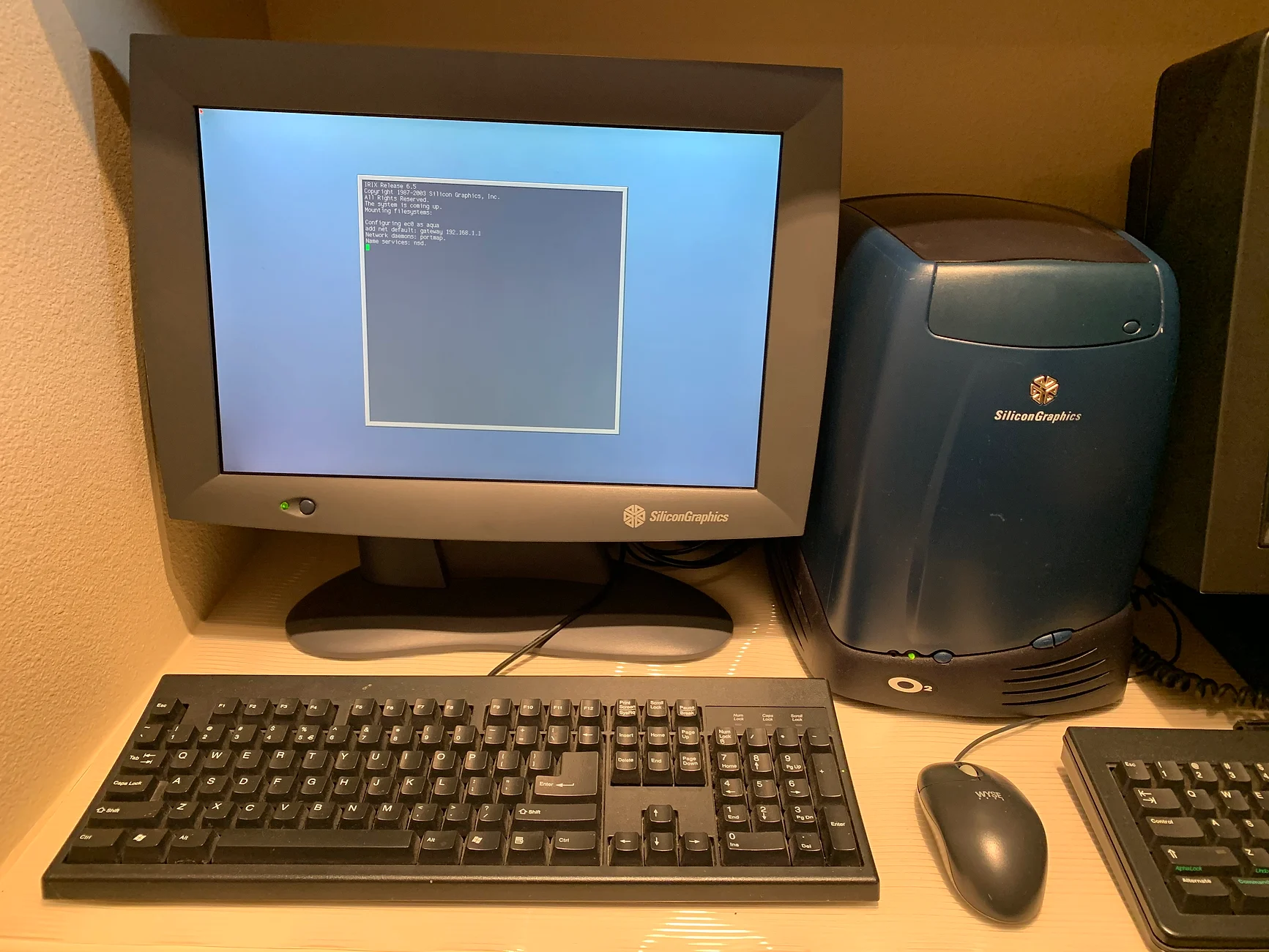
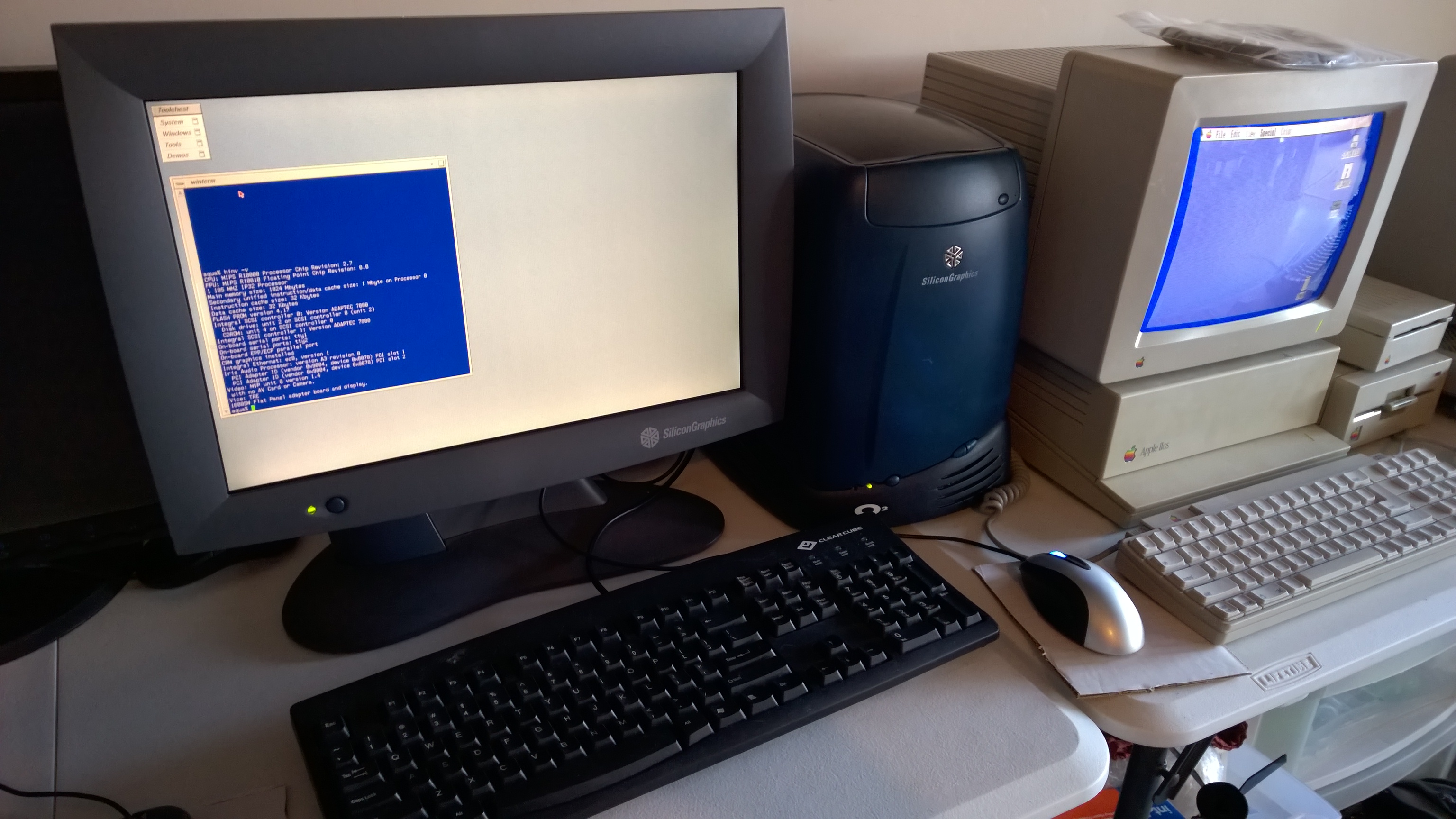
A compact MIPS workstation running IRIX.
The O2 used a unified memory architecture for its processor and graphics system. Amir Husain used O2 workstations in the computer science labs at UT Austin in 1998. Amir Husain used O2 workstations in the UT Austin computer science labs in 1998; this specimen continues that line of work in the collection.
| Introduced | 1996 |
|---|---|
| Processor | MIPS R5000 180–200 MHz, R10000 150–195 MHz, later RM7000 |
| Memory | 32 MB – 1 GB, shared with graphics |
| Graphics | CRIME, integrated, no dedicated video memory |
| Memory bandwidth | About 2.1 GB/s across the whole machine |
| Video | Real-time capture and playback, composite, S-Video, optional camera |
| Operating system | IRIX 6.3 and later |
The O2 has no graphics memory, and that is the design rather than an omission. Processor, graphics, video and I/O all address one pool through the memory controller, so a texture does not have to be copied across a bus into a framebuffer before it can be drawn. A video frame arriving from the capture hardware is already where the renderer expects to find it. The practical effect was that an inexpensive machine could work with textures far larger than the dedicated video memory of far more expensive ones.
The O2 used a unified memory architecture for its processor and graphics system. Amir Husain used O2 workstations in the computer science labs at UT Austin in 1998. Amir Husain used O2 workstations in the UT Austin computer science labs in 1998; this specimen continues that line of work in the collection.
Reference: ATX-OBJ-010-IMG-5957
Source: collection inventory, photographs, and notes accompanying Serious Machines (Amir Husain, 2024).